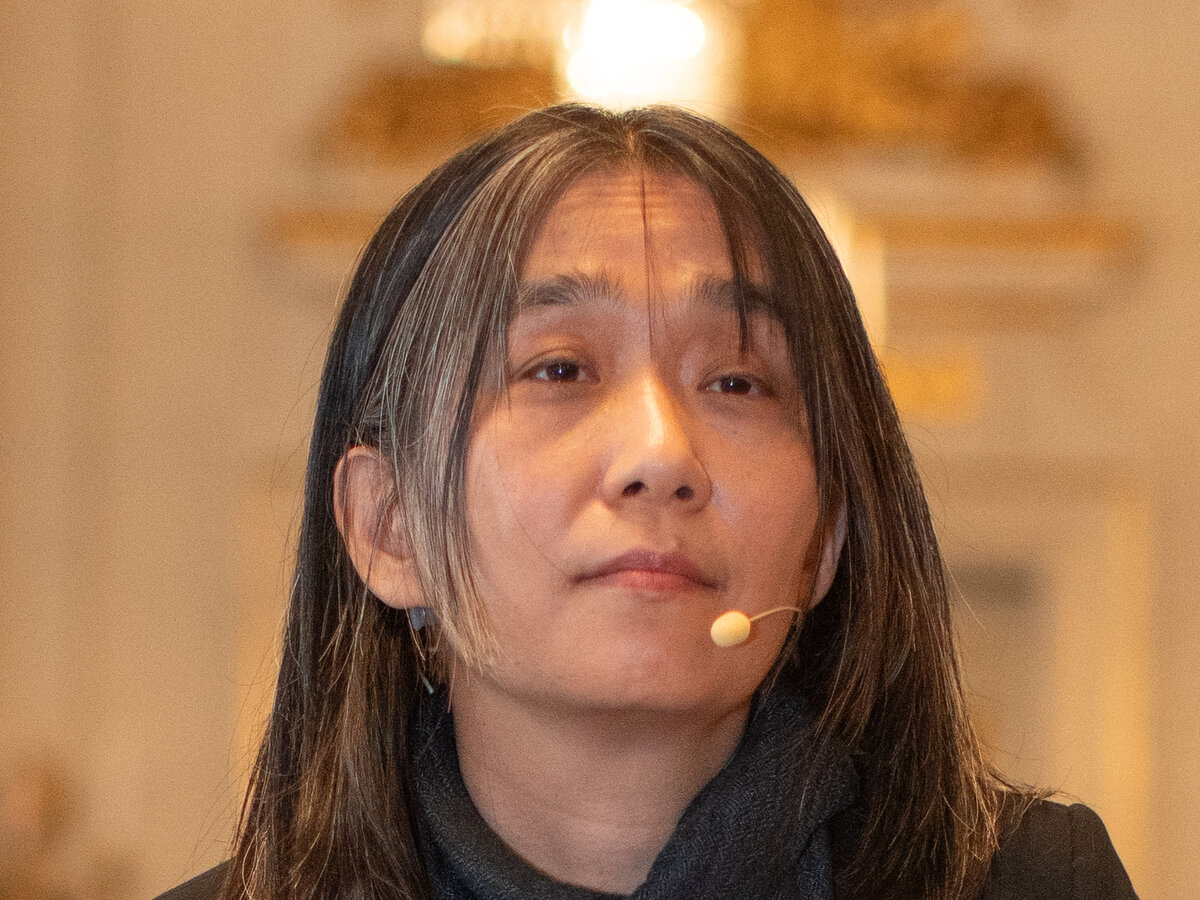
On 10 October 2024 Han Kang was having dinner with her son in Seoul when the Swedish Academy called. She had won the Nobel Prize in Literature "for her intense poetic prose that confronts historical traumas and exposes the fragility of human life". She is the first South Korean writer, and the first Asian woman, to receive it.
Gwangju, four months before
Han Kang was born on 27 November 1970 in Gwangju, in south-western South Korea. Her father, Han Seung-won, is a novelist, and the house was full of books. In January 1980 the family moved to Seoul. Four months later the army crushed the democratic uprising in Gwangju. When she was about 12 she found, at home, a book of photographs of the victims that her parents had hidden. She later said those pictures never left her.
She studied Korean literature at Yonsei University, published poems in 1993 and her first short story the following year. For about a decade she wrote novels and stories that were barely translated, while working as a journalist and later teaching creative writing.
A woman who stops eating meat
The Vegetarian came out in Korea in 2007. After a dream, Yeong-hye refuses to eat meat. Her husband, her father and her sister react with growing violence to a refusal none of them understands. The story is told by the people around her: she herself barely speaks.
Deborah Smith, who had started learning Korean only a few years earlier, published her English translation in 2015. In 2016 the novel won the International Booker Prize, shared between author and translator, and opened the way for translations of her other books.
Writing about the dead
Human Acts (2014 in Korean) goes back to Gwangju. It follows Dong-ho, a 15-year-old boy who helps identify bodies in a gymnasium, and then the people who survived the crackdown and never recovered. Han Kang has said she read hundreds of testimonies before she could write it.
We Do Not Part deals with another massacre that was long kept quiet: the killings on Jeju Island from 1948, in which up to 30,000 people were killed, according to estimates. Its French translation won the Prix Médicis for foreign fiction in 2023. In between she published The White Book, a meditation on an elder sister who died two hours after birth, and Greek Lessons, about a woman who loses the ability to speak.
No party in Seoul
After the announcement her father said she would not hold a press conference in Korea: with wars in Ukraine and the Middle East, she did not want a celebration. On 7 December 2024 in Stockholm she gave her Nobel lecture, "Light and Thread". She described finding, in a shoebox, childhood notebooks containing a poem about love she wrote at eight, and explained what each of her books had asked of her.
The lecture was collected in 2026 in Light and Thread, her first non-fiction book in English, alongside poems, diary entries and photographs. Another of her texts will wait much longer: in 2019 she gave the Norwegian Future Library project a manuscript, Dear Son, My Beloved, which will stay sealed in Oslo until 2114.
© Photo: John Sears - CC BY-SA 4.0 (cropped)