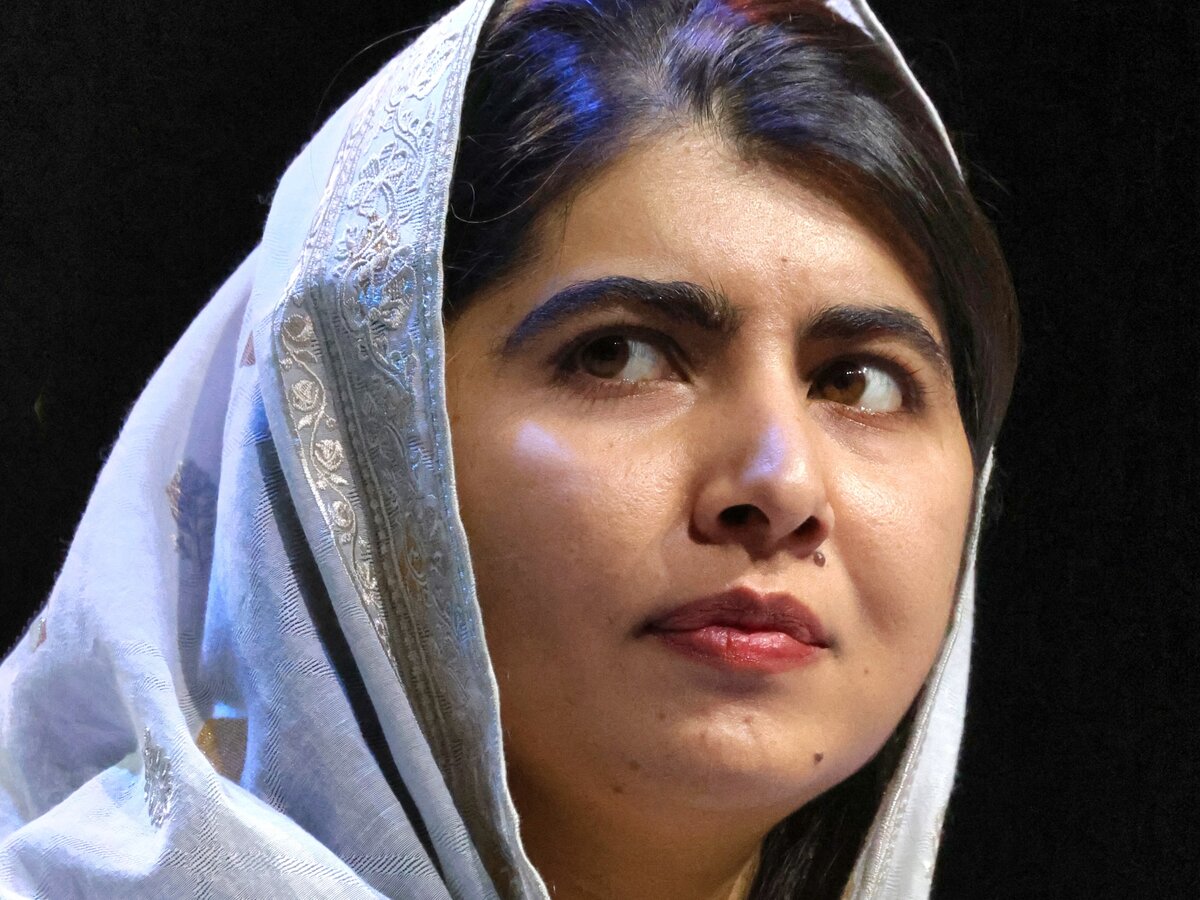
On 10 October 2014 Malala Yousafzai was in a chemistry lesson at her school in Birmingham when a teacher came to tell her she had won the Nobel Peace Prize. She finished the school day before speaking to the press. At 17 she was the youngest laureate in the prize's history, sharing it with India's Kailash Satyarthi.
The Swat Valley
Malala Yousafzai was born on 12 July 1997 in Mingora, in the Swat Valley of north-west Pakistan. Her father, Ziauddin, ran a school and campaigned for girls' education. From 2007 the Pakistani Taliban took control of part of the valley, blew up schools and eventually banned girls from attending.
In early 2009, aged 11, she kept a diary for the BBC's Urdu service under the pen name Gul Makai. She wrote about fear, explosions, and classmates who stopped coming to school. Her identity eventually became known, and she spoke openly in documentaries and on Pakistani television.
9 October 2012
That day a gunman boarded the school bus taking her home, asked which girl was Malala and shot her in the head. Two of her classmates were also wounded. She was treated in Pakistan and then flown to the Queen Elizabeth Hospital in Birmingham, where she recovered after several operations. Her family settled in the UK.
On 12 July 2013, her 16th birthday, she addressed the United Nations in New York: "One child, one teacher, one book and one pen can change the world." That year she published I Am Malala, written with the British journalist Christina Lamb, and set up the Malala Fund with her father.
The Nobel, then Oxford
The Nobel committee honoured Malala Yousafzai and Kailash Satyarthi "for their struggle against the suppression of children and young people and for the right of all children to education". She put the prize money towards a girls' school in Pakistan. Her fund supports local campaigners and organisations in countries including Pakistan, Nigeria and Afghanistan.
She went on to read philosophy, politics and economics at Oxford, graduating in 2020. She has since started a production company, Extracurricular, and produced documentaries including The Last of the Sea Women (2024), about the haenyeo divers of Korea's Jeju Island.
Afghanistan
Since the Taliban returned to power in Kabul in 2021, Afghan girls have been barred from school beyond primary level. In Johannesburg in December 2023, Malala Yousafzai called for this system to be recognised as "gender apartheid" under international law. She repeated the call in Islamabad in January 2025, at a summit on girls' education in Muslim countries.
In October 2025 she published Finding My Way, a second and more personal memoir about her student years and what it means to live an ordinary life after becoming a symbol at 15.
© Photo: flowcomm - CC BY 2.0 (cropped)