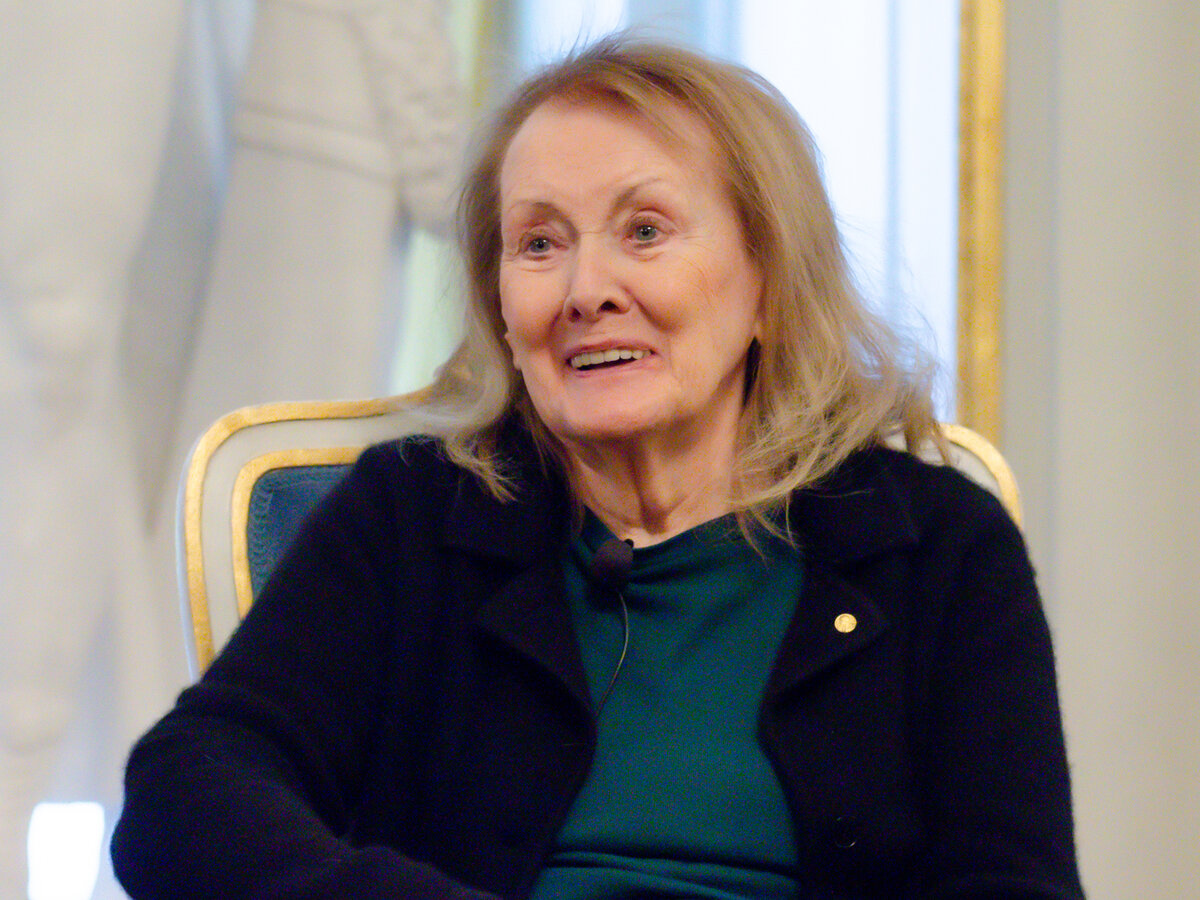
On 6 October 2022 the Swedish Academy awarded the Nobel Prize in Literature to Annie Ernaux "for the courage and clinical acuity with which she uncovers the roots, estrangements and collective restraints of personal memory". She was the first French woman to receive it.
A café-grocery in Yvetot
Annie Duchesne was born on 1 September 1940 in Lillebonne, in Normandy. She grew up in Yvetot, where her parents, both former factory workers, ran a small café and grocery. They were proud when she did well at school and then at the University of Rouen. Those studies also took her away from them. She became a literature teacher, passed the agrégation, married, and slowly realised she no longer quite belonged to the world she came from.
That gap runs through almost all her books. The first, Les Armoires vides (Cleaned Out), came out with Gallimard in 1974, while she was teaching. She kept teaching for many years, including at France's national distance-learning centre, and in 1977 moved to Cergy, a new town outside Paris that she later described in several of her journals.
Flat writing
In 1983 La Place (A Man's Place) told the life and death of her father. She gave up the novel and any stylistic flourish for what she called "flat writing", the plain language she once used in letters to her parents. The book won the Prix Renaudot in 1984. Une femme (A Woman's Story, 1987) did the same for her mother.
She does not write about herself for its own sake. Each book starts from a precise memory, a photograph, a gesture, something overheard, and connects it to what thousands of other people were living through at the same time. She has called the approach "auto-socio-biography".
Abortion, passion, the years
L'Événement (Happening, 2000) describes the illegal abortion she had in 1963, aged 23, when the law still banned it. Audrey Diwan's film adaptation won the Golden Lion in Venice in 2021. Passion simple (Simple Passion, 1992) describes waiting for a married lover, without shame or commentary, which shocked many readers at the time.
Les Années (The Years, 2008) is often seen as her most ambitious book. It covers six decades of French life, from the post-war years to the 2000s, through photographs of herself and a collective "we" rather than an "I". Translated into English in 2017, it was shortlisted for the International Booker Prize in 2019 and brought her a much wider readership.
"I will write to avenge my people"
In Stockholm on 7 December 2022 she opened her Nobel lecture with a line from her diary, written when she was 22: "I will write to avenge my people." She heard in it an echo of Rimbaud, and the wish to avenge the working people she came from. She said she had spent years working out how to write about them without betraying either their world or the world of literature.
That same year she co-directed The Super 8 Years with her son David Ernaux-Briot, a film edited from family footage shot between 1972 and 1981 and shown at Cannes. She also published The Young Man, a short text about an affair with a student thirty years her junior.
Ernaux has often taken public positions, on abortion rights and feminist causes. She still lives in Cergy, where she still writes.
© Photo: Frankie Fouganthin - CC BY-SA 4.0 (cropped)