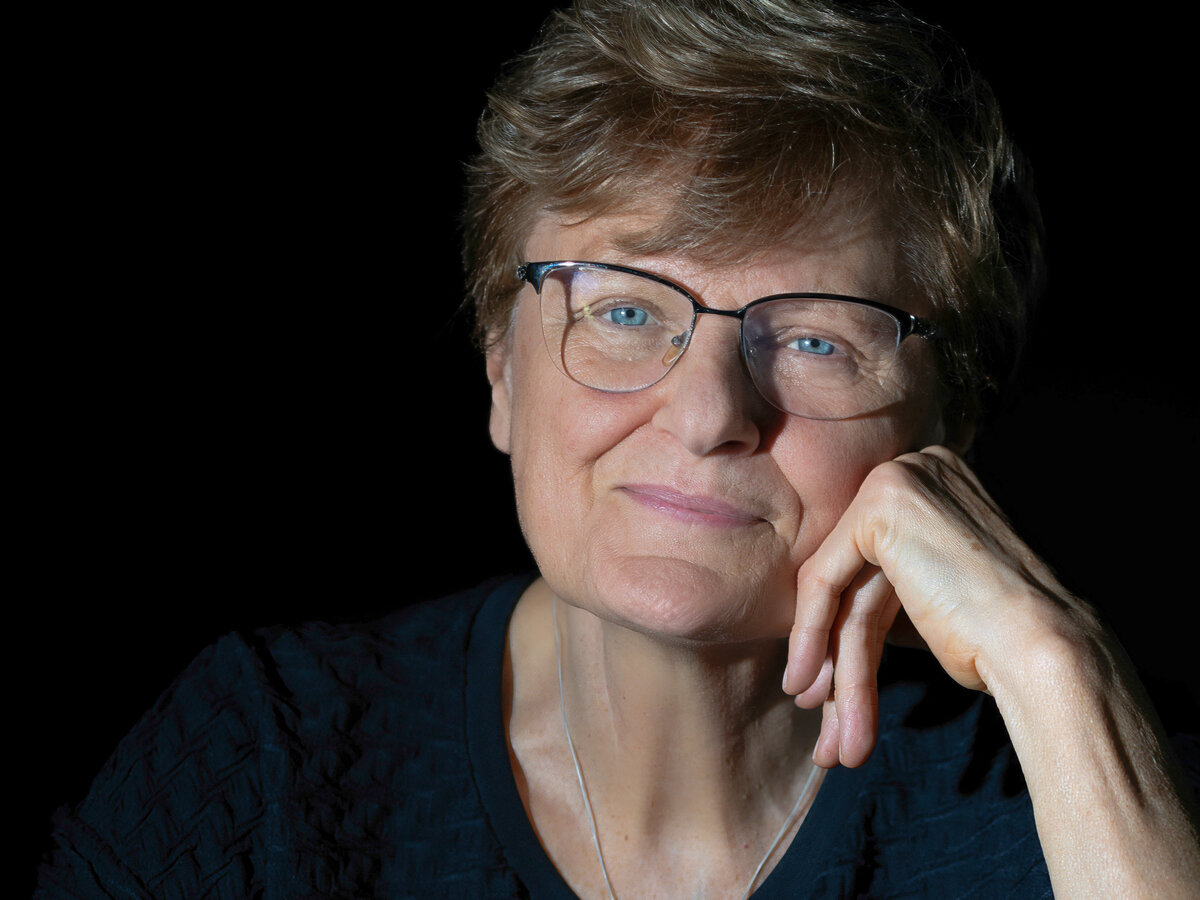
On 2 October 2023 Katalin Karikó won the Nobel Prize in Physiology or Medicine with Drew Weissman, for discoveries on nucleoside base modifications that made effective mRNA vaccines against Covid-19 possible. For years almost no one had wanted to fund her work.
A butcher's daughter
Katalin Karikó was born on 17 January 1955 in Szolnok, Hungary, and grew up in Kisújszállás in a small house with no running water. Her father was a butcher; watching him work, she became curious about how organs function. She studied biology at the University of Szeged, completed her PhD in 1982 and started working on RNA at the city's Biological Research Centre.
In 1985 her lab lost its funding. She took a job at Temple University in Philadelphia and left with her husband and their two-year-old daughter, Susan. Since only small sums of money could be taken out of the country, they hid the proceeds of selling their car, about £900, inside the child's teddy bear.
Demoted
From 1989 she worked at the University of Pennsylvania. Her idea was to use messenger RNA, the molecule that carries DNA's instructions to the cell, to get cells to make proteins that could act as medicines. Grant applications were turned down one after another. In 1995 she was demoted and her pay cut, just as she was facing a possible cancer diagnosis.
In 1997, at a photocopier, she met the immunologist Drew Weissman, who was looking for an HIV vaccine. They began working together. The problem was well known: injected RNA triggered strong inflammation and broke down before it could do anything.
One letter changed
In 2005 they published the answer. By swapping one of RNA's bases, uridine, for a natural variant, pseudouridine, the RNA slipped past the immune system and produced far more protein. The paper drew little attention. A few companies did take note, including Germany's BioNTech, which Karikó joined as a vice-president in 2013.
In 2020, once the SARS-CoV-2 genome was published, BioNTech with Pfizer, and Moderna separately, designed modified mRNA vaccines within weeks. Hundreds of millions of doses were given in 2021. When the clinical trial results came in, in November 2020, she celebrated with a box of chocolate-covered peanuts.
After the Nobel
Her daughter, Susan Francia, won two Olympic gold medals in rowing with the US team, in 2008 and 2012. Karikó told her story in Breaking Through, published in 2023. She is a professor at the University of Szeged, where she started out, and at the University of Pennsylvania, which had demoted her thirty years earlier.
© Photo: Christopher Michel - CC BY-SA 4.0 (cropped)