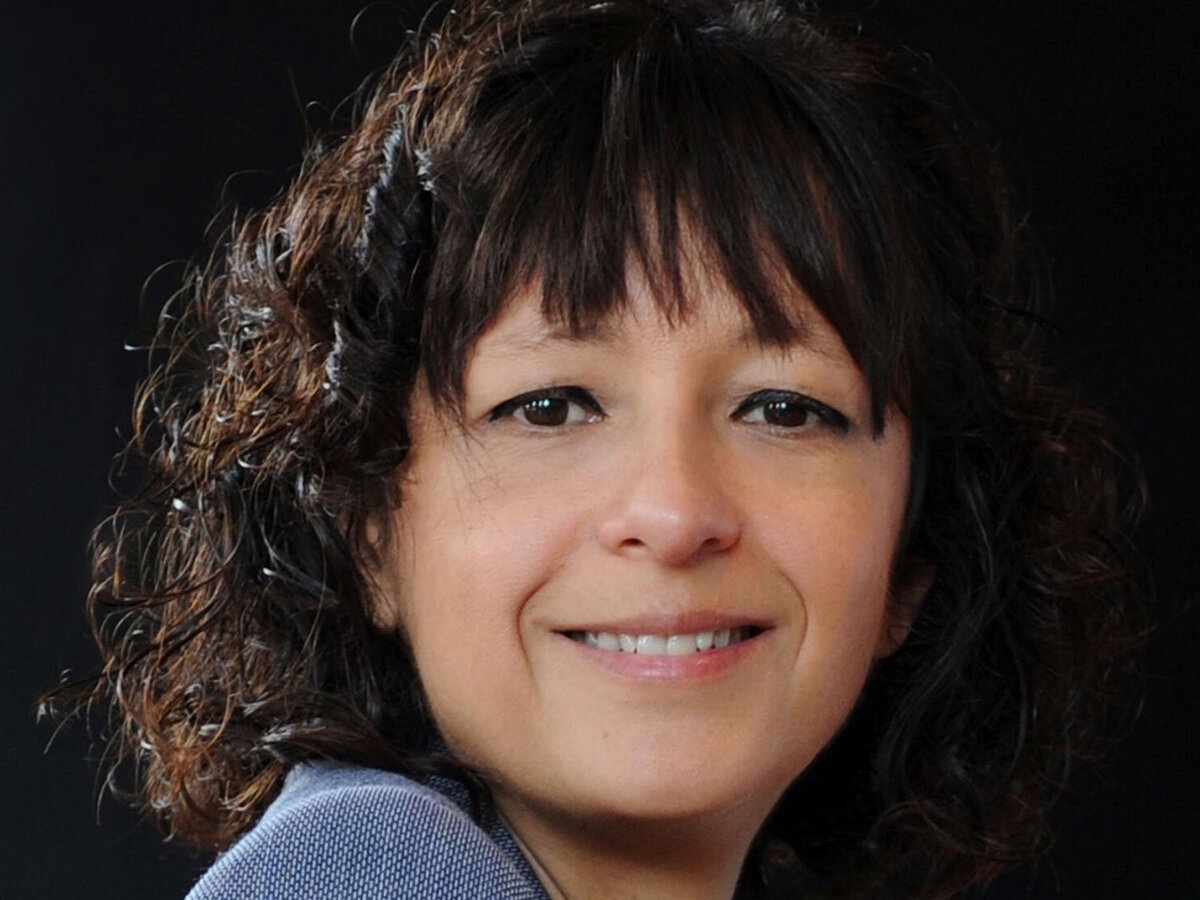
On 7 October 2020 the Nobel Prize in Chemistry went to Emmanuelle Charpentier and the American Jennifer Doudna "for the development of a method for genome editing". It was the first time a science Nobel had been shared by two women with no man alongside them.
Juvisy, Pasteur and ten labs
Emmanuelle Charpentier was born on 11 December 1968 in Juvisy-sur-Orge, south of Paris. She studied biochemistry and microbiology at Pierre and Marie Curie University in Paris, then did her doctorate at the Institut Pasteur, completing it in 1995. Her subject was bacteria and how they resist antibiotics.
Then came a career with no fixed base. New York, Memphis, Vienna, Umeå in northern Sweden, Braunschweig, Berlin: in around twenty years she changed country and institute about ten times. She has often said this mobility kept her independent, at the cost of putting her personal life aside.
A bacterial immune system
In Vienna and then Umeå she studied Streptococcus pyogenes, a bacterium that causes sore throats and serious infections. Like many others, it carries repeated sequences in its DNA, called CRISPR, which it uses to keep a record of viruses that have attacked it and to cut them up if they return.
In 2011 her team reported in Nature a previously unknown molecule, tracrRNA, that the mechanism needs. That year, at a conference in Puerto Rico, she met Jennifer Doudna, an expert on RNA structure, and they agreed to work together.
June 2012
In June 2012 their paper in Science showed that the Cas9 protein, guided by RNA, can cut any DNA sequence chosen in advance. They simplified the tool by fusing two RNAs into a single guide. What the bacterium used to defend itself became a cheap, precise lab tool for editing the genomes of plants, animals and humans.
Within a few years thousands of labs had taken it up. In 2013 she co-founded the company CRISPR Therapeutics. Ten years later, first in the UK and then in the US, a CRISPR-based treatment developed with Vertex, Casgevy, was approved for sickle cell disease and beta thalassaemia.
Berlin
Since 2015 Emmanuelle Charpentier has worked in Berlin, first as a director at the Max Planck Institute for Infection Biology and then as head of a unit she founded in 2018, the Max Planck Unit for the Science of Pathogens. She still studies bacteria, their defences and the ways they make us ill.
She had won many awards before the Nobel, including the Kavli Prize and the Princess of Asturias Award, both shared with Jennifer Doudna. She often warns against using the tool on human embryos, and points out that her discovery came from basic research on a bacterium, with no application in mind.
© Photo: Bianca Fioretti, Hallbauer & Fioretti - CC BY-SA 4.0 (cropped)