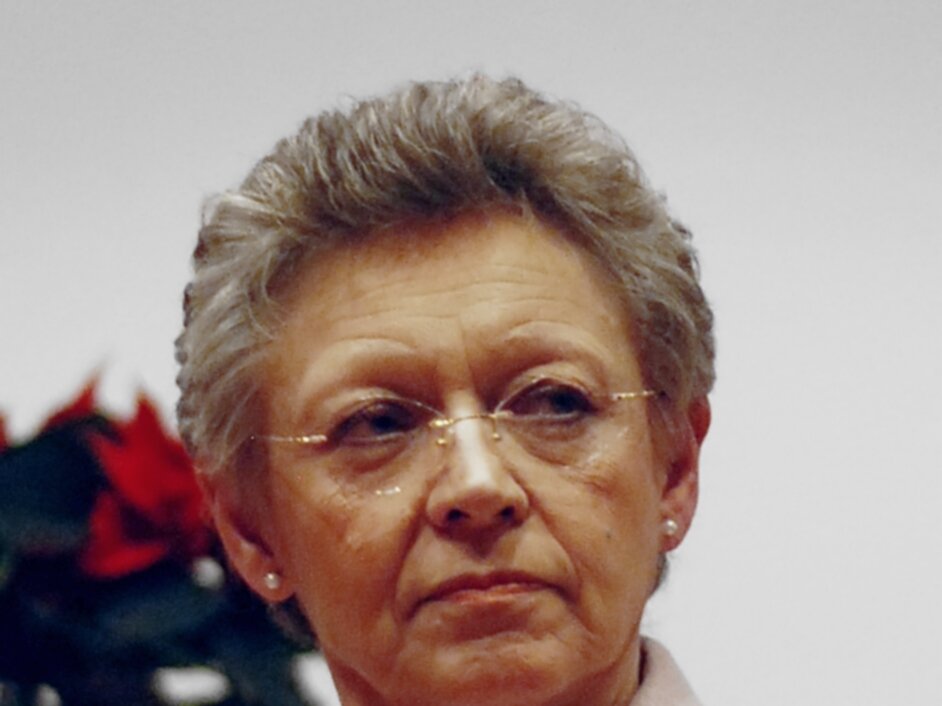
On 6 October 2008 Françoise Barré-Sinoussi learned that she had won the Nobel Prize in Physiology or Medicine with Luc Montagnier, for the discovery of the human immunodeficiency virus. She was in Cambodia, working on an HIV research project.
A volunteer at Pasteur
Françoise Sinoussi was born in Paris on 30 July 1947. She wanted to study medicine but chose natural sciences instead, a shorter and cheaper course for her family. As a student at the Paris science faculty she knocked on the doors of several labs asking to do research. The Institut Pasteur eventually took her on, first as a volunteer, in Jean-Claude Chermann's team working on retroviruses.
January 1983
In the early 1980s an unknown illness was killing gay men in the United States and then in France. No one knew the cause. In January 1983 the clinician Willy Rozenbaum sent Luc Montagnier's unit a lymph node sample from a patient. Barré-Sinoussi cultured the cells and tracked the activity of an enzyme, reverse transcriptase, a sign that a retrovirus was present.
After two weeks the signal appeared, then dropped as the cells died. The team added fresh white blood cells and the virus kept multiplying. She saw it under the electron microscope. The paper describing the virus, then called LAV, came out in Science on 20 May 1983. HIV had been identified.
Patients first
From the 1980s she visited hospitals and met patients. She has said that one man asked her whether she could save him, a question she never forgot. She spent the rest of her career on how the infection works, on why some people naturally control the virus, and on the hardest-hit countries in Africa and Asia, where she set up research partnerships.
The 2008 prize was shared with Luc Montagnier and, for a separate discovery, with Germany's Harald zur Hausen, who had linked papillomavirus to cervical cancer. In 2009 she wrote an open letter to Pope Benedict XVI, who had just said condoms made the epidemic worse.
Melbourne, 2014
From 2012 to 2014 she was president of the International AIDS Society. In July 2014, days before the world AIDS conference in Melbourne, a Malaysia Airlines plane was shot down over Ukraine; six delegates on their way to the conference died, among them the Dutch researcher Joep Lange. She opened the conference with a tribute to them.
She retired from the Institut Pasteur in 2015 but never left the field. She has chaired the French charity Sidaction since 2017, and in 2020 chaired CARE, the committee of experts set up to advise the French government on Covid-19.
© Photo: Prolineserver - GFDL 1.2 (cropped)