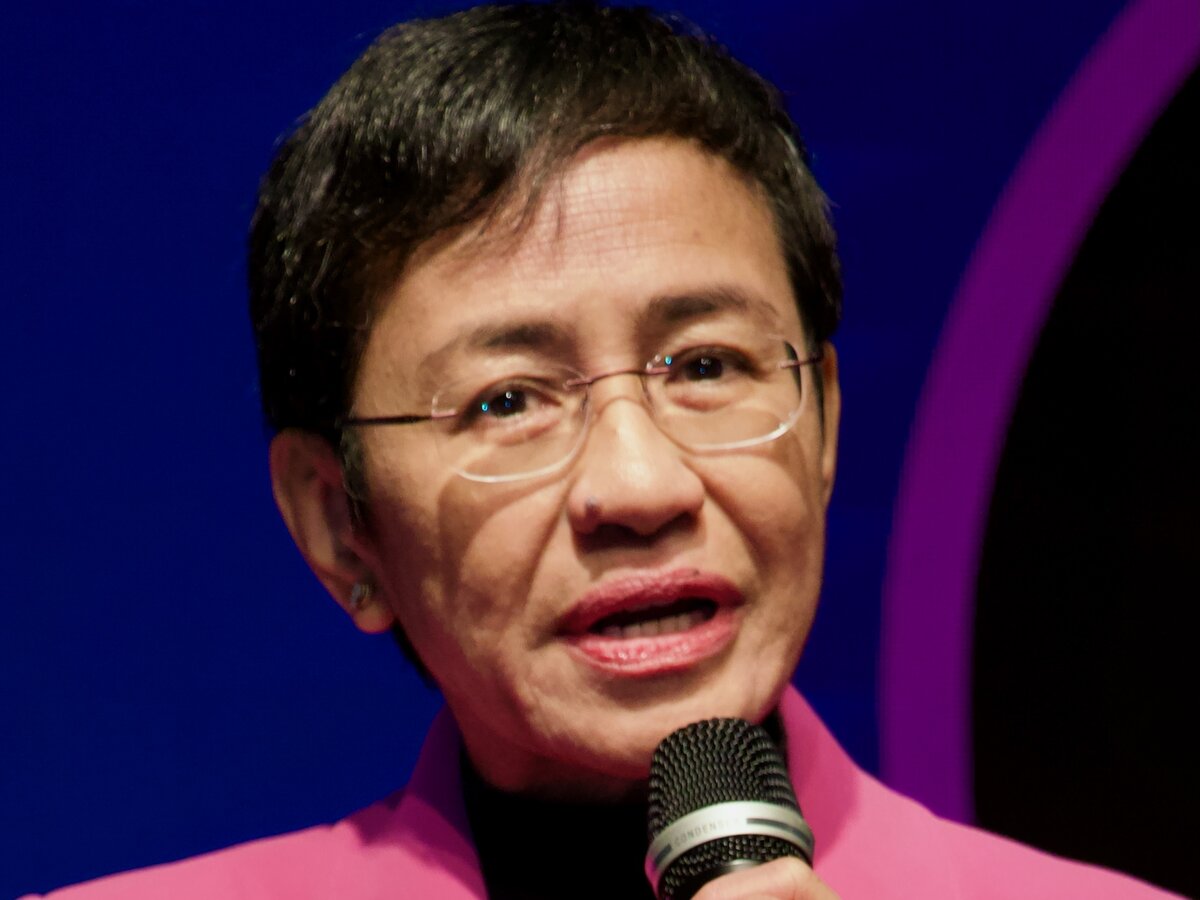
On 8 October 2021 the Norwegian Nobel Committee gave the Peace Prize to two journalists, Maria Ressa of the Philippines and Dmitry Muratov of Russia, "for their efforts to safeguard freedom of expression, which is a precondition for democracy and lasting peace". Ressa became the first person born in the Philippines to win a Nobel Prize.
Between Manila and New Jersey
Maria Ressa was born in Manila on 2 October 1963. At about ten she moved to New Jersey with her mother and stepfather, speaking almost no English when she arrived. She studied English literature and theatre at Princeton, then returned to the Philippines on a Fulbright scholarship.
She became a journalist just as the country emerged from Ferdinand Marcos's dictatorship. For almost twenty years she ran CNN's bureaus in Manila and then Jakarta, covering terrorism in South-East Asia. She later headed the news division of the Philippine network ABS-CBN.
Rappler
In 2012 she and other journalists founded Rappler, a news site built for social media. When Rodrigo Duterte took power in 2016 and launched his "war on drugs", Rappler documented the extrajudicial killings, which left thousands dead. It also published a series of investigations into coordinated Facebook accounts spreading government propaganda and harassing its critics.
The response came quickly. Ressa received thousands of hate messages a day. The government took Rappler to court over foreign ownership and tax. In 2019 she was arrested twice within a few weeks.
A string of cases
In June 2020 she was convicted of "cyber libel" together with a former Rappler journalist, over a story published in 2012, before the law in question had even taken effect. She appealed. Altogether she faced the possibility of more than a hundred years in prison. In January 2023 a court acquitted her of tax evasion; leaving court, she said facts had won.
In Oslo in December 2021 she described social media as a "toxic sludge" that rewards anger and lies over facts. Without facts, she said, you can't have truth; without truth you can't have trust; and without trust there is no democracy.
Teaching
She told her story in How to Stand Up to a Dictator (2022). Since 2024 she has taught at Columbia University in New York, while still leading Rappler, which keeps publishing in Manila. In 2018 Time magazine had named her one of its "Guardians" of the year, journalists targeted for their work.
© Photo: Xuthoria - CC BY-SA 4.0 (cropped)