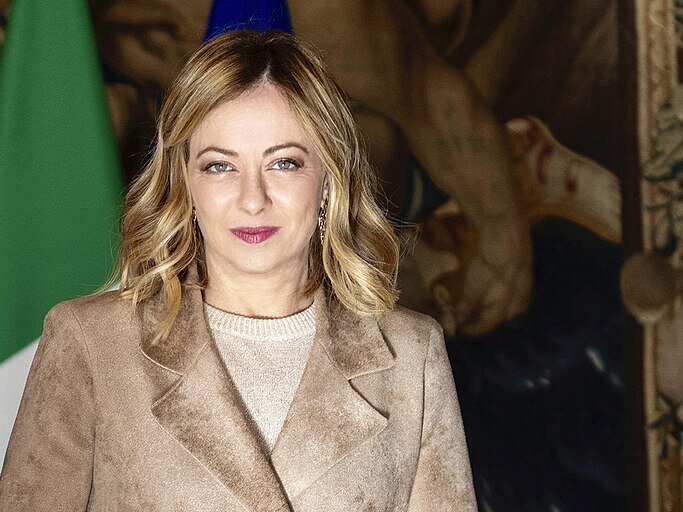
In September 2026, Giorgia Meloni’s government became the longest-lasting in the history of the Italian Republic, overtaking the record set by Silvio Berlusconi. Italy has had 68 governments since 1946, and her first one is still in office. Meloni, the country’s first woman prime minister, now faces a general election due in 2027, after a setback in the spring: Italians rejected her justice reform in a referendum.
Garbatella
Giorgia Meloni was born in Rome on 15 January 1977. Her father left the family when she was a baby, and she grew up with her mother and older sister in Garbatella, a working-class district in the south of the city. She went to a language-focused secondary school and later worked as a nanny and as a bartender at the Piper, a Roman nightclub, while she was involved in politics.
She joined the youth wing of the Italian Social Movement, the party founded by veterans of Mussolini’s regime, in 1992, at 15. She has said she did so after the Mafia murders of the judges Giovanni Falcone and Paolo Borsellino that year.
The youngest minister
She was elected to the Chamber of Deputies in 2006 and became its vice-president. In 2008, at 31, Silvio Berlusconi made her minister for youth, the youngest minister in the history of the Republic. In December 2012 she founded Fratelli d’Italia (Brothers of Italy) with Ignazio La Russa and Guido Crosetto. The party won 2% of the vote in 2013.
In 2019 a rally speech in which she said, “I am Giorgia, I am a woman, I am a mother, I am Italian, I am Christian” was turned into a dance remix by her opponents. The track went viral, and she used the line as the title of her autobiography in 2021.
Palazzo Chigi
In the general election of 25 September 2022, Brothers of Italy came first with about 26% of the vote. Meloni was sworn in on 22 October 2022, at the head of a coalition with Matteo Salvini’s League and Forza Italia. Her critics, in Italy and abroad, point to her party’s roots on the post-fascist right; she says she has left that legacy behind.
In office she has kept Italy firmly behind Ukraine, signed an agreement with Albania to process migrants outside Italian territory, which was blocked several times in court, and worked closely with Brussels. Her government has also pushed constitutional reforms.
A defeat, then a record
One of those reforms, separating the careers of judges and prosecutors, was put to a referendum on 22 and 23 March 2026. The “no” vote won with about 54%, on a turnout close to 59%. Meloni accepted the result and stayed in office. The party of the former general Roberto Vannacci is also competing with her on the right.
In autumn 2026 she was preparing her last budget before the election, which is expected in 2027. In October she told parliament that supporting Ukraine was “the path to peace”, and on 5 November she wrote to the President of the European Council, António Costa, warning that the many separate diplomatic initiatives on Ukraine risked weakening Europe’s credibility.
See also our profiles of Ursula von der Leyen and Sanae Takaichi.
© Photo: Governo Italiano - CC BY 3.0 IT (cropped)