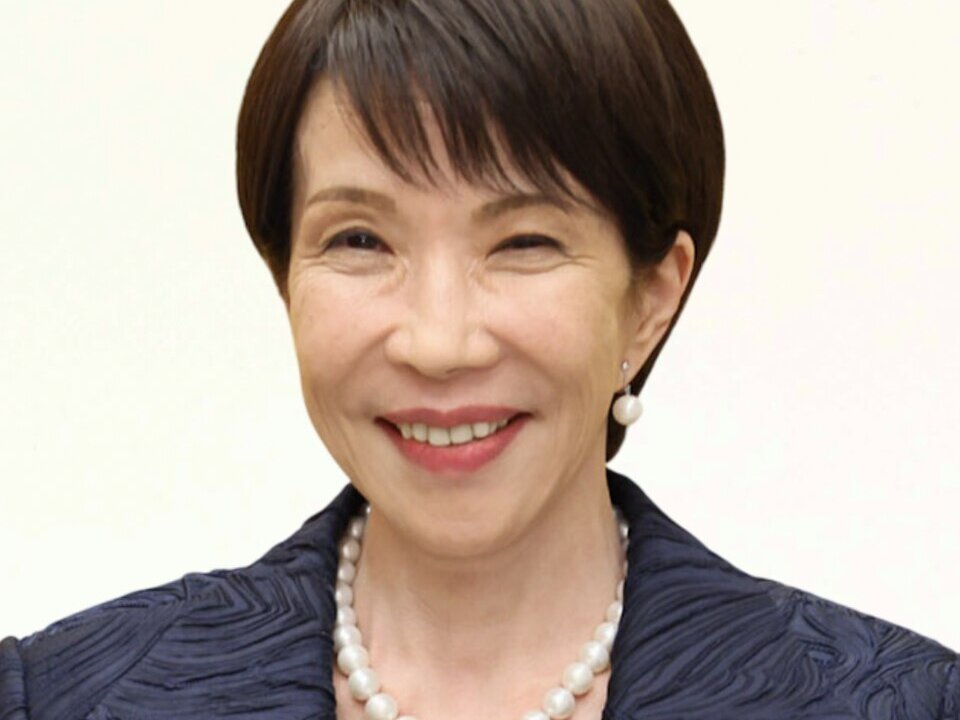
On 21 October 2025, Japan’s parliament elected Sanae Takaichi prime minister. No woman had held the post since the office was created in 1885. Four months later, she called a snap election and gave her Liberal Democratic Party (LDP) the largest lower-house victory in its history. A year into her premiership, she governs with a comfortable majority and an approval rating that, in October 2026, still stood at 57%.
Drums, motorbikes and Washington
Sanae Takaichi was born on 7 March 1961 in Nara Prefecture, into a family with no political background. She studied business administration at Kobe University, played drums in a heavy metal band and rode motorbikes. After graduating she joined the Matsushita Institute of Government and Management, a school for future leaders, and in 1987 went to Washington as a congressional fellow in the office of Patricia Schroeder, a Democratic congresswoman from Colorado.
Back in Japan she worked as a television presenter, then won a seat in the House of Representatives in 1993 as an independent. She joined the LDP in 1996.
Three campaigns for the party leadership
Close to Shinzo Abe, she became the longest-serving minister of internal affairs and communications, and later minister for economic security under Fumio Kishida. She has often named Margaret Thatcher as her political model. She ran for the LDP presidency in 2021 and lost, ran again in 2024 and lost to Shigeru Ishiba in a run-off, then won on her third attempt, on 4 October 2025.
The weeks that followed were turbulent. Komeito, the LDP’s partner for 26 years, left the coalition. Takaichi reached an agreement with the Japan Innovation Party (Ishin) and was elected by parliament on 21 October. She appointed Satsuki Katayama as Japan’s first woman finance minister.
The February 2026 landslide
On 23 January 2026, three months into her term, she dissolved the lower house. In the election of 8 February, the LDP won 316 of 465 seats according to the public broadcaster NHK, a two-thirds majority on its own, with a proportional vote share of 49.1%. Parliament re-elected her prime minister on 18 February.
Her programme mixes what she calls “responsible and proactive” fiscal policy with higher defence spending and a firmer line on China. Remarks she made in parliament in November 2025 about a possible emergency over Taiwan caused a diplomatic row with Beijing. On social questions she is a conservative: she opposes allowing married couples to keep separate surnames and supports male-only succession to the imperial throne.
A year on
In September 2026 she reshuffled her cabinet for the first time, keeping eight of 18 ministers, including Katayama at finance and Chief Cabinet Secretary Minoru Kihara. For the first time, a member of the Japan Innovation Party joined the government, as minister for regulatory reform. The revision of Japan’s national security documents is due by the end of 2026.
In January 2026, before the snap election, we covered the first weeks of her government: Sanae Takaichi considers an early election. See also our profile of Giorgia Meloni, another conservative woman leading a G7 country.
© Photo: Cabinet Public Affairs Office (Japan) - CC BY 4.0 (cropped)