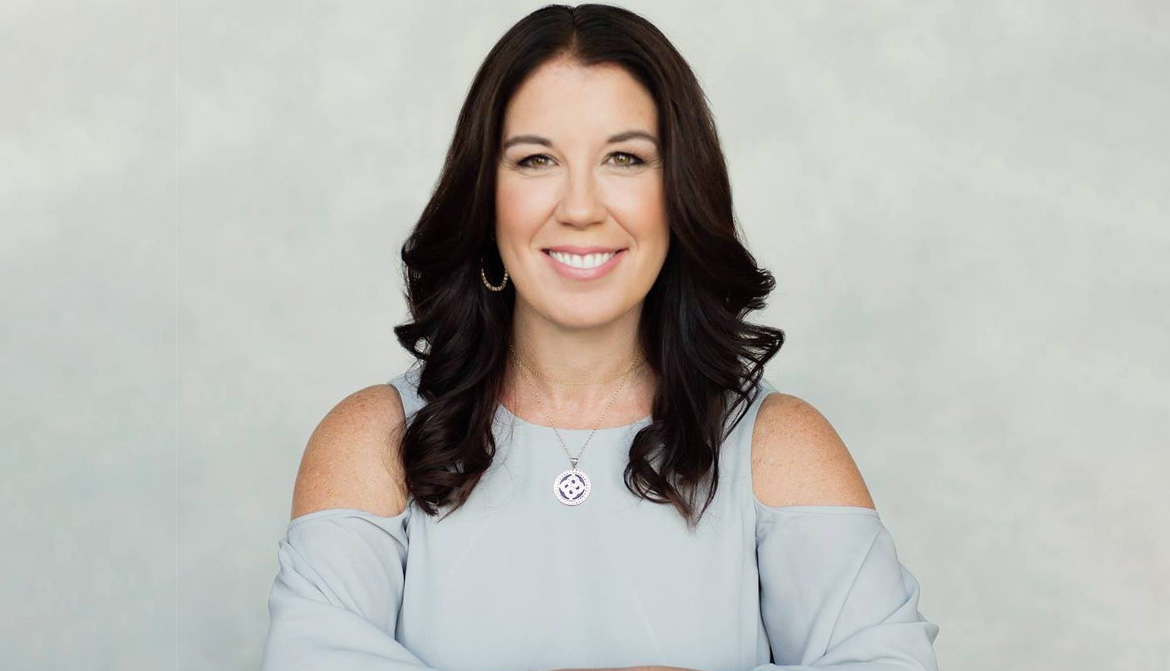
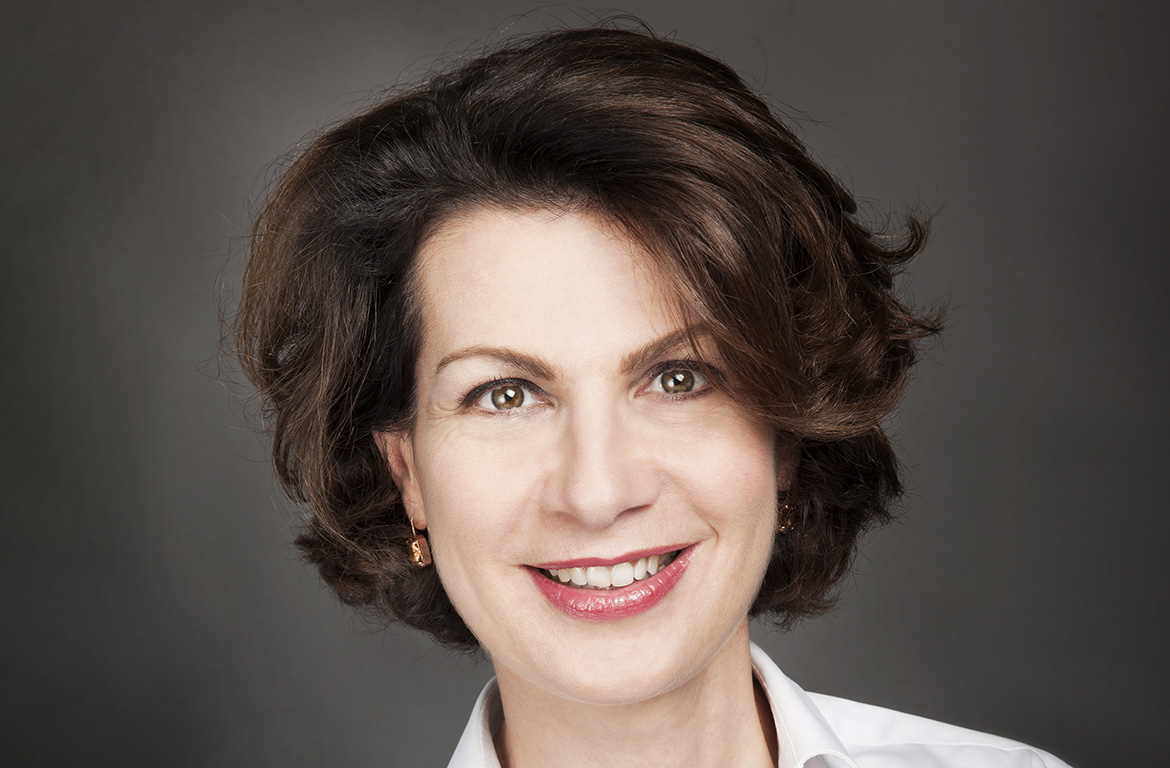
She wanted to work in the oil industry. She had studied geology and done very good internships, but was told that a woman had no place in the sector. So Marie-Christine Oghly built her career elsewhere, in fluid dynamics software, a field that was barely more open. World president of Femmes Chefs d'Entreprises (FCEM) from 2017 to October 2026 and president of the ASTech Paris Region competitiveness cluster, she spoke to Heroines of Our Time in June 2025 at the Hôtel Potocki in Paris, while still in office.
Three qualifications she didn't have
After geology she took an MBA and met a British company looking for 'a man with experience who spoke fluent English'. 'I had none of those three qualities,' she says. She convinced them anyway and walked into a very male environment: computing already was, and fluid dynamics software even more so.
Three years later the new shareholders offered her the job of managing director of the French subsidiary. She was 29 or 30 and found herself running a company without ever having planned to. It went well enough that an American firm headhunted her to set up its French subsidiary. She stayed five years, then moved to an Italian group. One day she told herself: 'Rather than working for others, start your own company and do the same thing, but for yourself.' She did, went through good years and hard ones, and relaunched the business. She still sells fluid dynamics software today.
Employee or owner
She was a salaried employee for only three years. After that she held corporate offices with the same responsibilities as if the company had been hers, and says she put exactly the same into them. The real difference was whose money was at stake: elsewhere she risked the shareholders' money, including a minority stake of her own; in her own company she risked only hers.
Running a large or mid-sized company is more comfortable, she admits. When you carry the whole responsibility, there are sleepless nights. You think about strategy, you wonder whether there will be enough cash at the end of the month to pay suppliers and salaries. At other times you are waiting on a big contract, and you don't sleep then either.
FCE, founded in 1945
She chaired FCE France from 2004 to 2013 before becoming world president, and she tells the association's story; it turned 80 in 2025. After the war, many French women found themselves running businesses that had belonged to their father, brother or husband. They could not open a bank account and had no say in the trade bodies. FCE's founder, Yvonne-Edmond Foinant, was one of them: her husband had been killed in the war, she already worked in the company but was no longer treated the same way, and both the chamber of commerce and the national employers' federation shut her out. So she created an association where women in her position could work together, share their problems and break into those male networks.
By 1949 she had reached out to Belgian and German women who had set up similar associations. The world organisation followed in 1957, with Canada among its founding members. The aims have barely changed: winning seats for women business owners on employers' bodies, solidarity and mentoring, and doing business together, whether members belong to FCE France, Germany's VdU or America's NAWBO. The network meets twice a year, in spring and autumn. FCEM has observer status at the United Nations and the European Parliament, and when Oghly travels she meets ministers, presidents and sometimes kings to argue for women's economic empowerment.
The association recently signed a partnership with UNIDO, the UN's industrial development agency, covering digitalisation, women's empowerment, sustainable development and the circular economy. A white paper on the circular economy is to be handed to the UN. A mentoring programme pairs European and American mentors with women business owners in Mauritius, Madagascar, the Comoros and the Seychelles, with other regions to follow.
Her term as FCEM world president ended in October 2026. She was succeeded by Patricia Isabel Garcia of Argentina.
The only woman in her field
'I am a woman, of course, but above all I am a business owner,' she says. She approaches every subject the same way, whether the setting is female, mixed or male, and it is mostly male. 'In fluid mechanics there is the word mechanics.' Since October 2020 she has chaired ASTech Paris Region, the aerospace, space and defence cluster for the Paris region, as its first woman president. Among France's aerospace clusters, she is the only woman in the role.
Things are moving. In aerospace, defence, the chambers of commerce and the employers' federation Medef, programmes try to encourage girls into these careers. The numbers are stubborn, though. French chambers of commerce have a 40 per cent quota for women among elected members, but none for presidents, and only 10 or 11 of the 122 chambers are led by a woman. 'Unfortunately, sometimes we have no choice but to use quotas.'
From glass ceiling to glass cliff
France imposed boardroom quotas with the Copé-Zimmermann law, and Europe followed. She remembers Angela Merkel promising, at one of the association's congresses in Berlin, to apply them in Germany. 'She did.' In the United States, NAWBO campaigned for quotas in politics and on boards. There is real progress in Africa, in Bahrain, in Asia and across Europe, sometimes in places people don't expect.
She warns that without vigilance, things slide back. During Covid, it was often women who looked after the children. And after the glass ceiling comes the glass cliff: a woman almost reaches the job she was aiming for and is pushed out, or she is handed an impossible task on the reasoning that if she fails, it can be blamed on her being a woman. To men who complain that only women get promoted now, she replies that this is a rebalancing. She quotes Françoise Giroud: equality will be reached on the day an incompetent woman holds the same job as an incompetent man. A man, she notes, will take a job with 20 per cent of the skills it requires; a woman hesitates if she doesn't have 60 to 80 per cent.
No guilt
Her advice to young women comes down to one word: dare. 'Either way, you have nothing to lose. You have everything to gain.' Set aside the impostor syndrome, the reflex of telling yourself you don't have all the skills or don't know the job or the environment. Start or take over a business, take on responsibility, without putting up barriers and without feeling guilty about spending less time with your partner or children. 'If that is what you want to do, you really have to do it.'
© Video: Heroines of Our Time