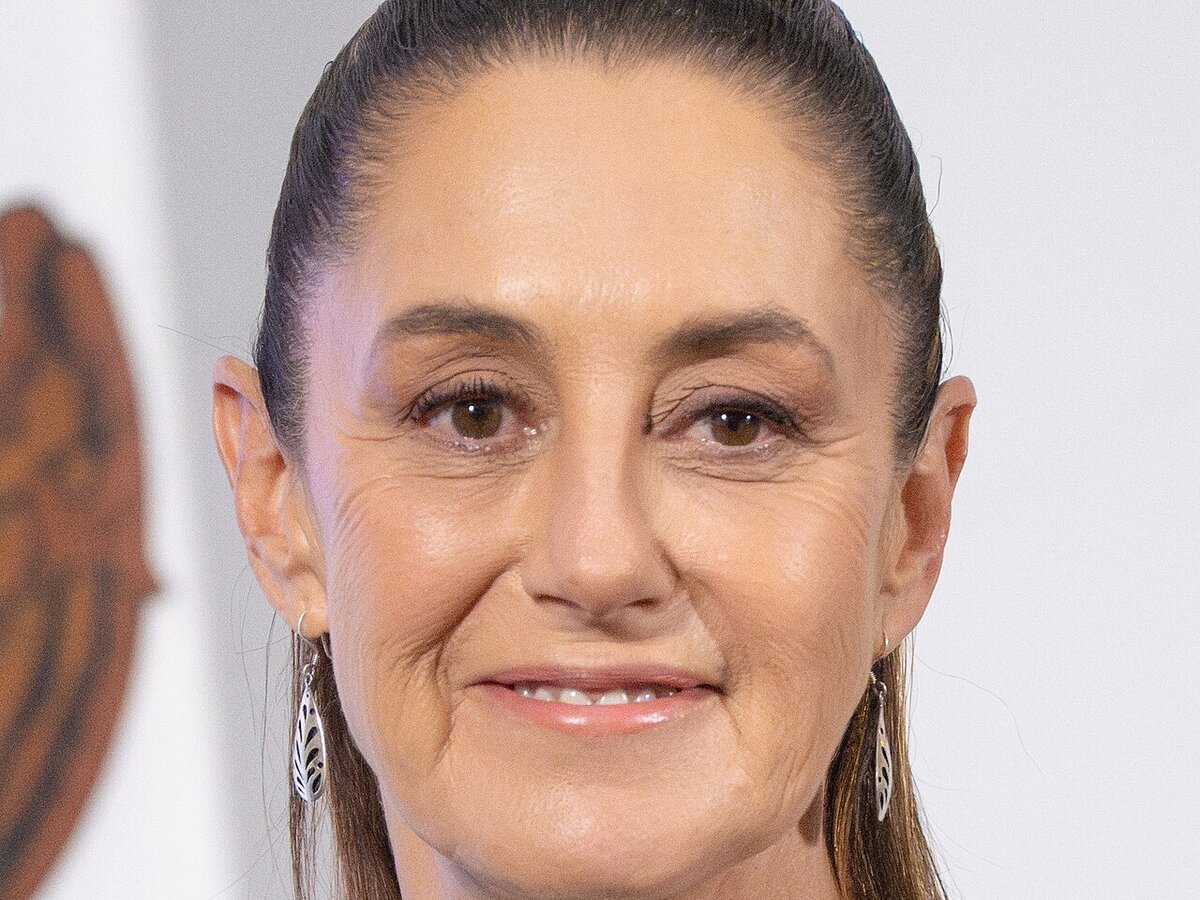
On 1 October 2024, Claudia Sheinbaum took the presidential sash in Mexico City and told Congress: “I do not arrive alone. We all arrive.” Two hundred years after independence, Mexico had its first woman president. She is a physicist by training, holds a doctorate in energy engineering and spent years working on climate change before she ever ran for office. In November 2026, two years into a six-year term, she remains one of the most popular leaders in Latin America.
A scientist from a family of scientists
Claudia Sheinbaum Pardo was born in Mexico City on 24 June 1962. Her father was a chemical engineer and her mother a biologist; her grandparents were Jewish immigrants who had come to Mexico from Lithuania and Bulgaria. She studied physics at the National Autonomous University of Mexico (UNAM), where she was also active in the student movement of the late 1980s.
Her doctorate, in energy engineering, took her to the Lawrence Berkeley National Laboratory in California, where she studied energy use in Mexico. She later contributed to the work of the Intergovernmental Panel on Climate Change (IPCC), which shared the Nobel Peace Prize in 2007.
From the environment ministry to City Hall
In 2000, Andrés Manuel López Obrador, newly elected head of government of Mexico City, made her his environment secretary. She stayed six years and is remembered for the second level of the city’s ring road and the Metrobús rapid-transit lines. She followed López Obrador into the party he founded, Morena, was elected mayor of the Tlalpan borough in 2015 and, in 2018, became the first woman elected to run Mexico City.
The 2024 landslide
Chosen as Morena’s candidate in 2023, she won the presidential election of 2 June 2024 with almost 60% of the vote, about 36 million ballots, ahead of another woman, Xóchitl Gálvez. Her government promised continuity with López Obrador’s social programmes, along with new pensions for women aged 60 to 64.
The first two years were not quiet. A judicial reform inherited from her predecessor led to the first nationwide election of judges, in June 2025, with turnout of around 13% and sharp criticism from the opposition. Relations with Donald Trump’s administration have swung between tariff threats and security deals. Sheinbaum has stuck to a daily routine: her early-morning press conference, the “mañanera”, held almost every weekday.
Where she stands in November 2026
In her second report to the nation, delivered on 1 September 2026, she described a “stronger, safer and more prosperous” Mexico. A CB Global Data survey published in early November gave her an approval rating of 69.8%, the highest among the leaders of 18 Latin American countries. In mid-November she travelled to Shenzhen for the APEC summit, while her interior minister stood in for her at the morning briefing.
At home, attention is turning to the 2027 midterm elections. On 11 November, Sheinbaum accused the opposition of trying to discredit the vote in advance.
Other women now hold the same office elsewhere. You can read our profiles of Kamala Harris and of Japan’s prime minister, Sanae Takaichi, in the same series.
© Photo: Eneas - CC BY 4.0 (cropped)