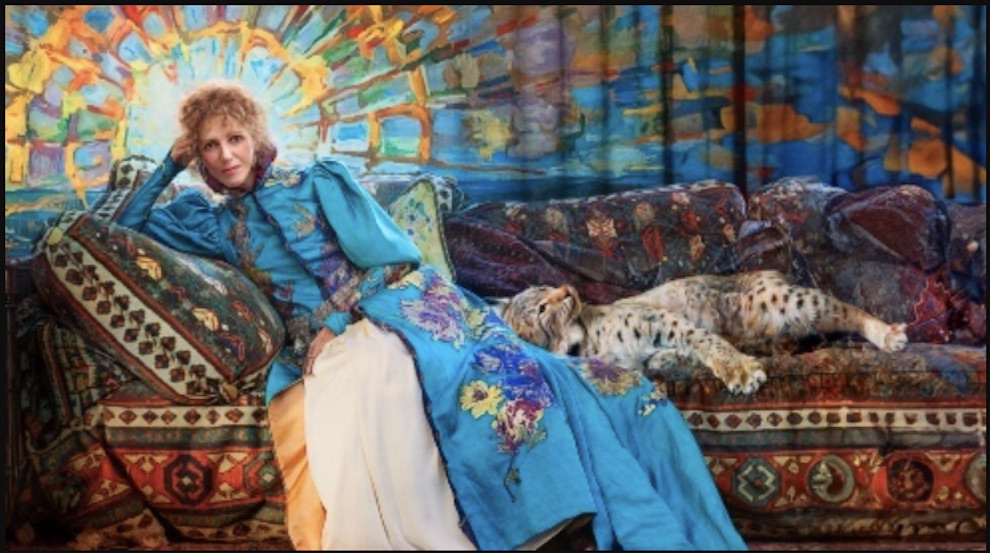
Gloria Steinem died on 2 September 2026 at her home in New York. She was 92. A journalist and co-founder of Ms. magazine, she was for more than half a century the best-known face of American feminism, and one of the few activists whose name meant something to students and their grandmothers alike.
The next day a post on her official Instagram account said she had died peacefully, “surrounded by some of the many who loved her”. It added that her “near-century on earth were years well-lived, and she continued working for equality until the very end”. Her representatives asked people to light a candle in her honour and to support Gloria’s Foundation.
A childhood on the margins
Born on 25 March 1934 in Toledo, Ohio, Steinem grew up in an unsettled household. Her father, a travelling salesman, was often on the road. Her mother, Ruth, had worked as a journalist before a severe breakdown left her fragile for the rest of her life. After her parents separated in 1944, the young Gloria looked after her mother largely on her own for years. She later said it taught her early on what it costs a woman to give up her own life.
She left Toledo for Smith College, graduating in 1956, then spent two years in India on a fellowship. There she encountered community organising and a way of campaigning built on listening, sitting in a circle, that stayed with her for good.
A journalist nobody took seriously
Back in New York she wanted to write about politics. Editors offered her pieces on fashion and diets. In 1963 she took a job undercover as a waitress at the New York Playboy Club and wrote a two-part account for Show magazine about the working conditions of the “Bunnies”: painful costumes, docked wages, humiliating medical checks. The piece made a splash, but it followed her for years; people reduced her to that image and serious assignments were slow to come.
In 1968 she became one of the founding political columnists at New York magazine. The following year she covered a meeting where women spoke publicly about their abortions, then illegal in most states. She later said that was the night she became a feminist. Her 1969 article “After Black Power, Women’s Liberation” established her as a voice of the movement.
Ms., a magazine written by women
In 1971 she co-founded the National Women’s Political Caucus with Betty Friedan, Bella Abzug and Shirley Chisholm, among others, to get more women to stand for office. That same year she and Dorothy Pitman Hughes launched the Women’s Action Alliance.
Then came Ms. The first issue appeared as an insert in New York magazine, followed by a standalone issue in 1972. The test copies sold out across the country in eight days. The magazine covered domestic violence, equal pay and harassment at a time when mainstream publications barely had words for them. Its title made its own point: “Ms.”, a way of addressing a woman without asking whether she was married.
Talk, listen, move on
Steinem was never a theorist. Her gift lay elsewhere: in the line that sticks, in linking one struggle to another and above all in handing the microphone to others. For decades she criss-crossed the United States, often alongside Black activists such as Dorothy Pitman Hughes and Florynce Kennedy, speaking in universities, churches and town halls. She made a point of leaving as much room for discussion as for speeches. One of her best-known lines, which she credited to an Irish woman taxi driver, sums up her tone: “If men could get pregnant, abortion would be a sacrament.”
She also spoke about herself with unusual candour. Diagnosed with breast cancer in 1986, she was treated and carried on. In Revolution from Within (1992) she wrote about self-esteem, puzzling some in the movement. In 2000, at 66, she married the environmental activist David Bale, who died three years later. In 2015 she published My Life on the Road, an account of her travels that is also a book about the art of listening.
A figure handed on
The honours came late and in numbers. Barack Obama awarded her the Presidential Medal of Freedom in 2013. In January 2017, aged 82, she was an honorary co-chair of the Women’s March on Washington and addressed a vast crowd. In 2020 Julie Taymor’s film The Glorias had four actresses play her at different ages, including Julianne Moore and Alicia Vikander, and the series Mrs. America put her opposite Phyllis Schlafly. In 2021 Spain gave her the Princess of Asturias Award for Communication and Humanities.
She was criticised a great deal over the years: for her fame, her looks, and some positions she later revised herself. She took the blows, corrected course and kept going. She never claimed to speak for all women. What she wanted was for each of them to be able to speak for herself.
What she leaves
It is hard now to grasp what it meant, in 1972, to have a magazine that addressed women as citizens. Much of what she fought for has become ordinary: a woman holding a bank account in her own name, reporting harassment, standing for election without being asked who will mind the children. Other battles, over reproductive rights in particular, flared up again in her lifetime.
Steinem spent her life on the road, from one town to the next, one meeting hall to another. She travelled it to the end, stepping aside to let others speak whenever she could. Keeping the conversation going may be the best tribute there is.
© Photo: Lynn Gilbert - CC BY-SA 4.0 (cropped)