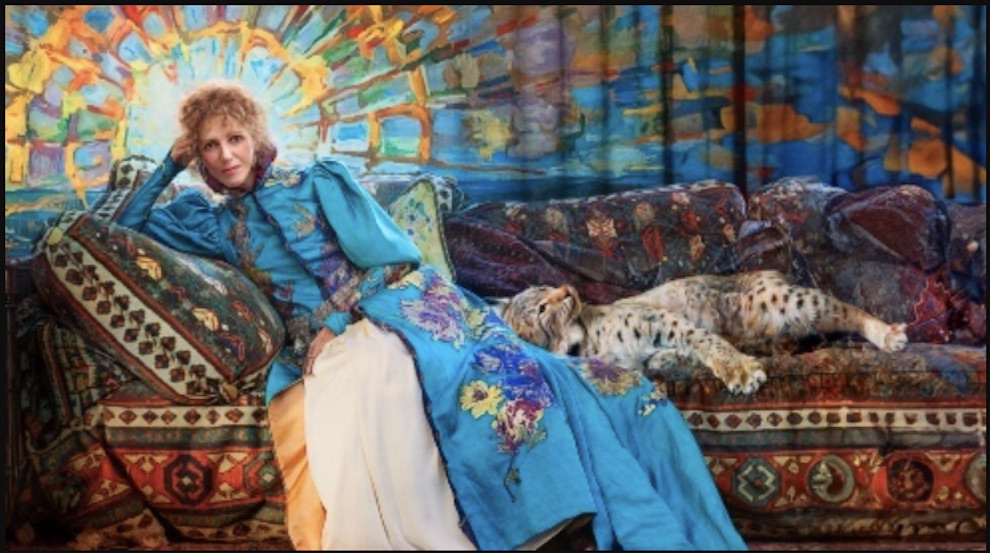
Taraji P. Henson is best known as Cookie Lyon, the larger-than-life heroine of Empire. Since 2018 she has also been doing quieter work through the Boris Lawrence Henson Foundation, a non-profit that helps Black and underrepresented communities in the United States talk about mental health and find the right kind of help.
Named after her father
The foundation carries the name of the actress’s father, Boris Lawrence Henson. A Vietnam veteran, he came home with mental health problems for which he never received real support. Henson has often spoken about how that silence weighed on her family, and how common it remains in Black American communities, where seeing a therapist was long treated as a sign of weakness.
She set up the foundation in 2018 with Tracie Jade Jenkins, who became its executive director. The aims were twofold: to reduce the stigma around mental illness among Black Americans, and to put therapy within reach of people who often go without, whether for lack of money, lack of available clinicians or lack of therapists who understand their lives.
A therapist who gets it
That last point sits at the centre of the project. The foundation talks about “culturally relevant” care: patients should be able to describe what they are going through, everyday racism included, without having to explain everything from scratch. To that end it maintains a therapist directory, the Let’s Talk! resource guide, and funds scholarships for students training for careers in mental health, so that more practitioners come from these communities in the long run.
In spring 2020, as Covid-19 hit Black neighbourhoods in American cities especially hard, the foundation launched a free virtual therapy campaign. The idea was simple: up to five sessions with a clinician in its network, paid for until the money ran out. Registration opened on 15 April 2020. Demand was so high that, as Henson told reporters at the time, they had to shut the server down.
Schools and campuses
The foundation then turned its attention to young people. In 2023, with the Kate Spade Foundation, it began installing “She Care Wellness Pods” on the campuses of historically Black colleges and universities: spaces where students can see a therapist, join a workshop or simply find somewhere quiet. In schools it runs the Take A Minute Challenge, a thirty-day programme that sets aside three minutes a day for pupils’ wellbeing. In June 2026 the foundation described this work in schools across Prince George’s County, Maryland, on its website.
Every autumn it also hosts Can We Talk?, a gathering that brings the arts and mental health together. The fifth edition took place in October 2025 around World Mental Health Day, in partnership with Prince George’s County.
An actress who learned to speak up
Born in Washington, DC, in 1970 and a graduate of Howard University, Henson took a while to break through in Hollywood. She was noticed in John Singleton’s Baby Boy in 2001 and then in Hustle & Flow in 2005. Her role as the adoptive mother in The Curious Case of Benjamin Button earned her an Oscar nomination for best supporting actress. Then came Empire, which won her a Golden Globe in 2016, the mathematician Katherine Johnson in Hidden Figures, and Shug Avery in the 2023 version of The Color Purple.
What stands out is her decision to talk about her own struggles instead of simply lending her name. She has spoken publicly about her anxiety and depression, and about how hard it can be to find a therapist who truly understands where you come from. That first-person honesty helps the cause: when a star says she sees a therapist, the subject becomes a little less shameful for everyone else.
Slow, practical work
AARP, the large American association for people over fifty, has also given her an honorary Purpose Prize for her work on mental health in marginalised communities. The award recognised work that is anything but showy: therapy sessions paid for one at a time, quiet rooms on campus, three minutes a day in a classroom.
Eight years on, the foundation is still small but clear about what it does. It does not claim it will fix America’s mental health crisis. It wants a Black person who is struggling to know where to turn, and to feel able to ask. That was exactly what Boris Lawrence Henson never had.
© Photo: Philip Romano - CC BY-SA 4.0 (cropped)