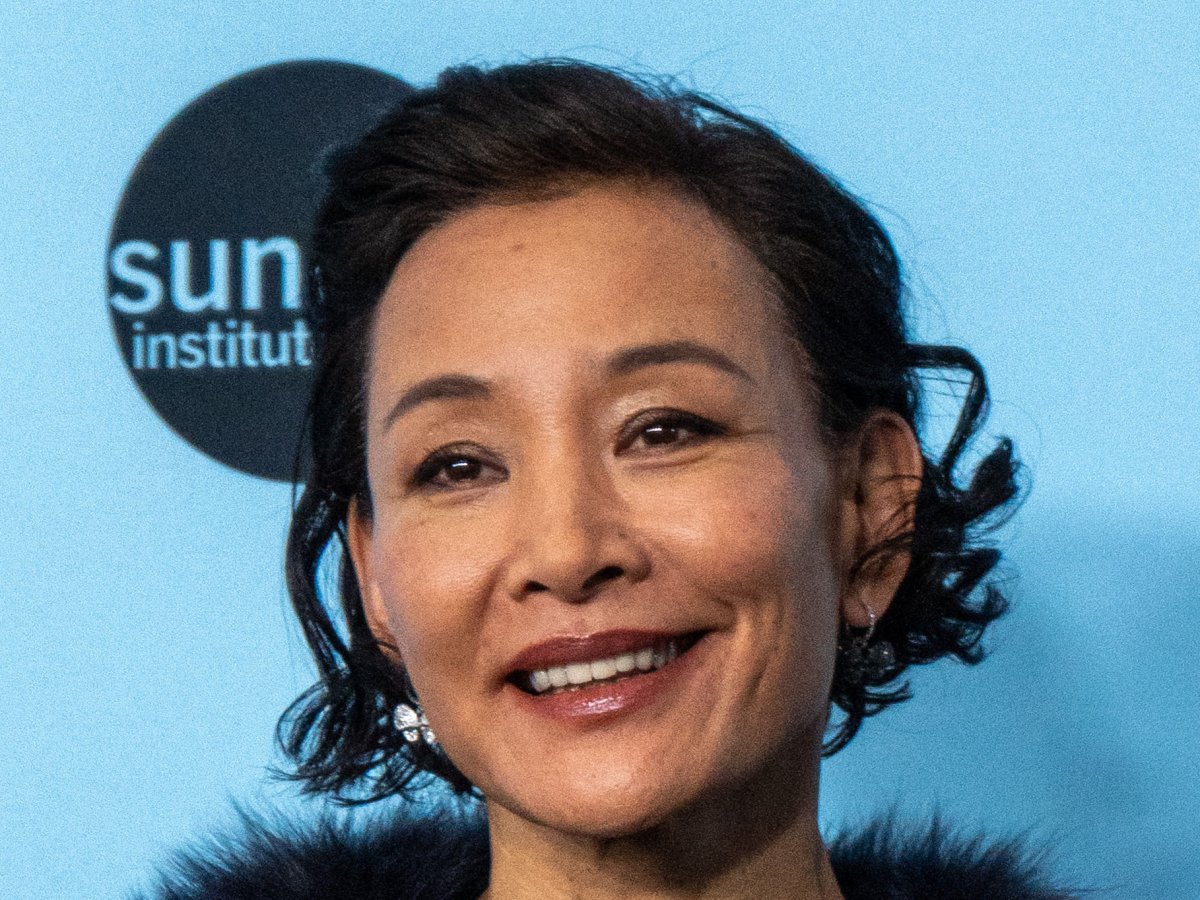
Octavia Spencer is an American actress, producer and author. Since 15 July 2026, she has been on screen in Ride or Die on Prime Video, returning to the centre of a comic action series that uses her gift for understatement as one of its strongest engines.
In Ride or Die, Octavia Spencer plays Debbie, the best friend of Judith, played by Hannah Waddingham. Their bond drives a story that begins in the familiar territory of friendship and swerves into espionage when Judith is revealed to be an international assassin. Prime Video lists the series among its July 2026 releases, with Spencer and Waddingham leading a cast that also includes Ed Skrein and Bill Nighy.
The premise has the brisk shape of entertainment: two grown women, an old friendship, secrets detonating at speed, and a flight from danger in which humour has to keep pace with bullets. Yet Spencer’s presence gives the whole thing a grounded charge. She can make disbelief credible, let fear flicker without flattening the comedy, and place intelligence at the centre of a scene even when everything around her is built for chaos.
A career built through patient work
Born in Montgomery, Alabama, Octavia Spencer belongs to that class of actors whose later fame can obscure the length of the apprenticeship that came before it. Before she became one of the most recognisable faces in American film, she worked through smaller parts, brief appearances and character roles in which a performer must arrive fully formed within seconds. That kind of training leaves a mark. Nothing can be wasted. A line, a glance, a pause all have to carry weight.
Her career also tells a broader story about the routes available to women, and particularly to Black women, in Hollywood. Spencer was not immediately handed a neat path to leading roles. She moved by accumulation: supporting parts, independent films, studio comedies, dramas and television work. That endurance remains visible in her acting. She does not need to dominate a frame loudly in order to change its temperature.
The public turning point came with The Help, released in 2011. As Minny Jackson, she brought together wit, exhaustion, dignity and contained anger in a performance that reached far beyond the film’s broad popularity. In 2012, the Academy of Motion Picture Arts and Sciences awarded her the Oscar for best supporting actress. The win was often described as a breakthrough, but it was also the recognition of years of discipline and presence.
After the Oscar, a talent for complication
The danger after such success might have been confinement: the sharp line, the sensible woman, the protective force, the character who lends warmth to someone else’s story. Spencer has often taken those expectations and gently unsettled them. In Hidden Figures, she played Dorothy Vaughan, a character inspired by the NASA mathematician, in a film that helped bring long-overlooked Black women into the public story of the American space programme. The following year, Guillermo del Toro’s The Shape of Water gave her a part in which friendship, humour and loyalty became intimate forms of resistance.
Both films brought her further Academy Award nominations for best supporting actress, following her win for The Help. That sequence matters: it shows peers respect Spencer, beyond audience affection, for the emotional weight she gives characters who might otherwise stay peripheral.
She has also broadened her work as a producer. That move behind the scenes is more than a career extension. In an industry where access to stories remains uneven, producing is a way of shaping possibility: deciding which faces, voices and complexities are given space to exist on screen.
The strength of not overplaying
What is striking about Spencer is how often she works against excess. Even when a film or series places her in a heightened world, she pulls attention back to the human scale: how someone absorbs news, how she protects herself, how she loves, how she resists panic. Much of her acting is built on active listening. She gives the impression of hearing more than the dialogue states.
That quality explains why she can move from historical drama to thriller, from comedy to fantasy, without losing her centre. She brings a precise humanity to popular genres. She does not weigh them down; she anchors them. In Ride or Die, that intelligence is especially useful. Against the pace of chases and revelations, Debbie is not simply a passenger dragged into Judith’s adventure. She becomes the viewer’s point of entry: the person measuring the absurdity of danger while discovering the strength of a friendship under pressure.
Her pairing with Hannah Waddingham is also notable for what it represents. Action television has often reserved speed, stunts and strategic fantasy for male characters, or for heroines presented as younger and more easily packaged. To see two established actresses, with mature voices, bodies and comic rhythms, placed at the centre of a chase-and-spy story is not incidental. It is not a revolution announced with a banner; it is a useful correction of focus.
Longevity as achievement
Spencer now occupies a distinctive place: popular without becoming predictable, warm without becoming bland, Oscar-winning without seeming trapped by prestige. Her trajectory speaks to a kind of perseverance that is more than patience. It requires judgement, humour and the ability to survive the categories an industry is eager to impose.
With Ride or Die, she does not abandon what has made her powerful; she carries it into a more playful register. The series allows her to enter an action frame without giving up the truth of human relationships. Above all, it reminds viewers that a major actress is not defined only by the role that first reveals her. She is also defined by the later choices that keep expanding what audiences believe she can do.
Amid the noise of a spy comedy, Spencer offers something quieter: a presence that has learned how to last, in an industry often impatient to replace women’s faces.