Released on 3 July 2026, Confessions II has returned Madonna to the centre of the pop conversation: No.1 in the United States, the United Kingdom, Australia and France, the album extends a four-decade career built on one persistent idea: the dance floor as a place of memory, freedom and repair.
Some comebacks arrive dressed as nostalgia. Madonna’s return with Confessions II feels more purposeful than that: not a retreat into a former triumph, but a test of what can still be made from it. Released by Warner Records on 3 July, her fifteenth studio album has already become a chart event. It entered the Billboard 200 at No.1, earning 134,000 equivalent album units in the United States during its first tracking week. In Britain, it reached the summit of the Official Albums Chart; in Australia, ARIA announced it as her thirteenth No.1 album; in France, it opened at the top of the national albums chart for the week of 14 to 20 July.
Those figures are striking, but their significance lies beyond scale alone. At 67, Madonna is not merely being welcomed back as a legacy artist. She is competing in a music economy shaped by short attention spans, streaming fragments and a commercial culture that often treats youth as the only renewable resource. Confessions II has cut through that noise by insisting on an old-fashioned pop idea: the album as a complete room, not just a corridor of singles.
A sequel, not a shrine
The title inevitably points to Confessions on a Dance Floor, the 2005 album that turned the continuous club mix into one of Madonna’s most elegant late-career statements. Yet Confessions II does not play like a museum piece. The reunion with Stuart Price, the producer so closely associated with the earlier record, might have been a temptation to polish the past and present it unchanged. Instead, it gives the new album a foundation from which to move.
Warner describes the record as sixteen continuously mixed tracks exploring love, trauma, loss and healing. That language matters in Madonna’s work because the body has always been one of her primary instruments. For her, dance music has rarely meant simple escape. It has been a way of turning vulnerability into motion, of making desire public, of refusing to let pain become stillness.
The album begins with I Feel So Free, which had already reached No.1 on Billboard’s Dance Airplay chart. It also includes Bring Your Love with Sabrina Carpenter, Read My Lips with Feid, Bizarre with Martin Garrix, My Sins Are My Savior with Stromae, and The Test, co-written and performed with her daughter Lola Leon. The list could have sounded like a parade of market-aware collaborations. In practice, it underlines something more interesting: Madonna placing herself in conversation with different generations, scenes and languages while remaining the organising intelligence of the project.
The dance floor as an intimate politics
The immediate success of Confessions II is especially resonant at a time when dance music is everywhere, yet often used as decoration: a quick charge for a clip, a texture for a trend, an energy source for whatever the platform requires next. Madonna has long treated the club as a social space. From Vogue to Hung Up, from New York’s underground to European disco and electronic music, she has understood dance as a culture of codes, refuge and self-invention.
That conviction is not new, but here it carries a more reflective charge. The themes highlighted around the album — survival, healing, formative friendships, early New York — place Confessions II within a personal history rather than simply a sound world. Danceteria and L.E.S. Girl, made with Andrew Watt, Cirkut and Stuart Price, look back to the city where Madonna first shaped herself: downtown, ambitious, alert to style, danger and possibility.
It is more than decorative biography. Madonna Louise Ciccone, born in Bay City, Michigan, went to New York in 1978 to pursue dance before music became her main arena. The mythology that followed was built on that crossing: rehearsal rooms, clubs, video, and eventually full creative control. Many performers are made by their moment. Madonna has repeatedly helped define how a moment sees itself.
Longevity built from rupture
The July 2026 chart success should not be mistaken for a sentimental prize. Madonna’s career has included triumphs, misfires, controversies, brilliant instincts and moments when strategy seemed to outpace feeling. She has not been right about every record. What matters more is her willingness to treat pop as a laboratory for testing age, faith, gender, sexuality, celebrity and power in public.
With Confessions II, Billboard counts her tenth No.1 album in the United States. Its report also notes that she becomes the first artist to have a No.1 album in the 2020s after already topping the Billboard 200 in three other decades. Such milestones can appear dry on the page, but they mark an unusual form of continuity: not sameness, but repeated reinvention under scrutiny.
In the United Kingdom, the Official Charts Company lists Confessions II at No.1 on the Official Albums Chart, as well as on sales, downloads, physical albums and vinyl rankings. In Australia, ARIA called it her thirteenth chart-topping album. In France, the albums chart placed it at No.1 on entry. Together, those positions suggest more than a localised fan mobilisation. They point to a broadly legible proposition: Madonna has returned to dance music, but with the weight of experience rather than the sheen of imitation.
What this return tells us
It would be easy to call this a victory of brand management. Madonna knows how to sell an object, build an image, multiply editions and occupy the cultural foreground; she has known that for a very long time. But that reading is too thin. What makes Confessions II worth attention is not simply that it has performed well, but that it revisits one of her defining myths without becoming trapped inside it.
Madonna is not asking listeners to forget the past. She summons it openly. But she refuses to live inside it as an exhibit. In pop, where women are so often expected to soften, vanish or repeat themselves after a certain age, that refusal has cultural force. It is not only provocation. It is a claim to duration.
With Confessions II, Madonna steps back onto the dance floor, but the light around her is not only glitter and mirrorball. It is the light cast by a career that has moved through formats, scandals, fashions and technological upheavals without surrendering its central appetite for transformation. The new No.1 does not close a story. It just confirms that Madonna is still the one deciding what reinvention means.
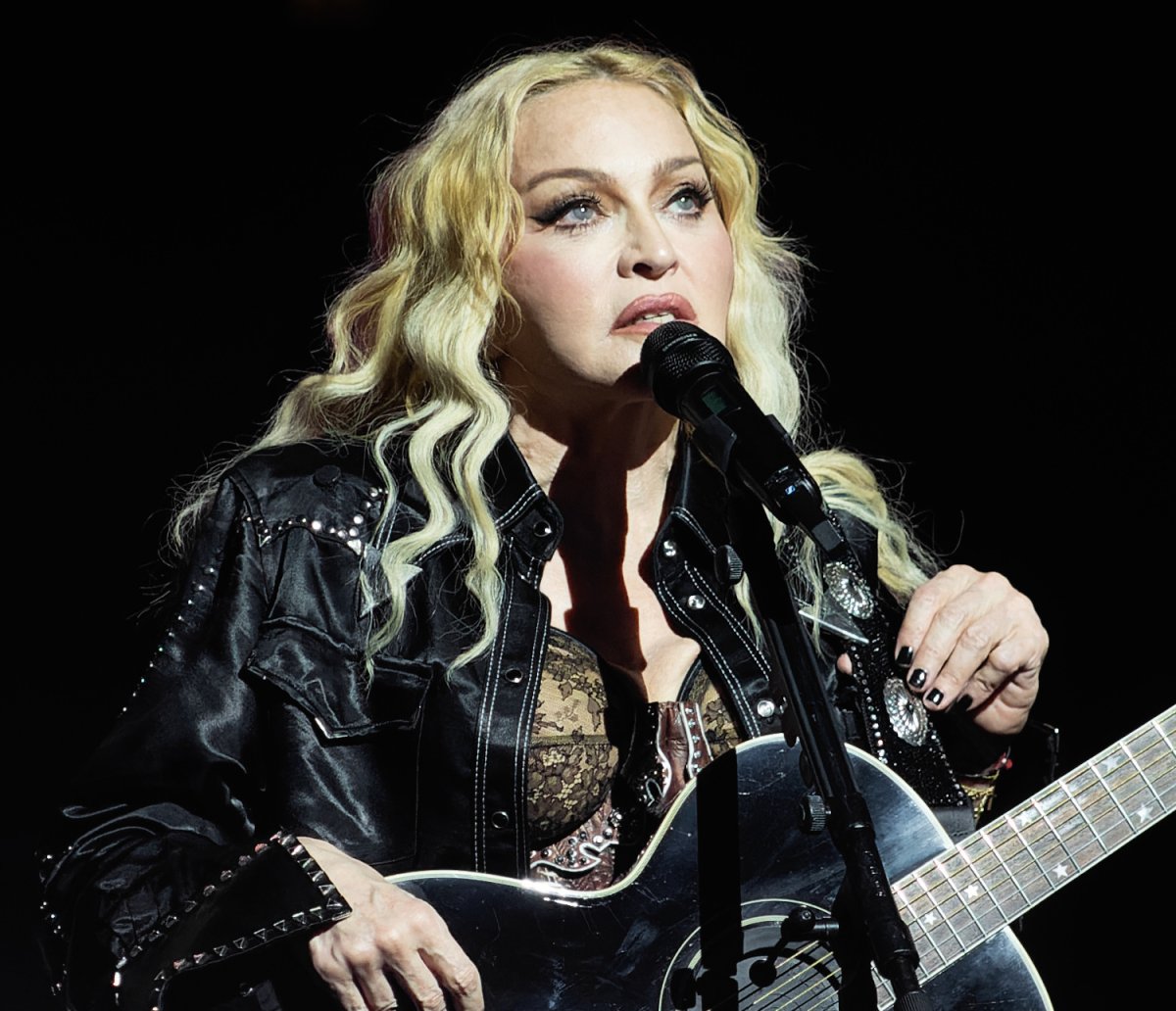
© Photo: Raph_PH - CC BY 2.0 (cropped)